
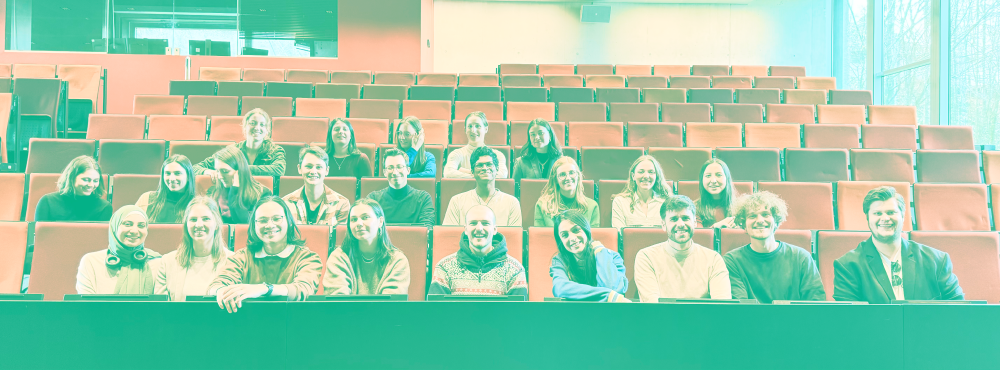
Students
Student Representatives

Camellia Redko
1st year HCI student
Class of 2025
Riccardo Longo
1st year HCI student
Class of 2025

Moritz Sendner
1st year HCI student
Class of 2025
Moritz Sendner
1st year HCI student
Class of 2025
Moritz Sendner
1st year HCI student
Class of 2025
Student Projects
Research Projects
In the second semester, the focus of the program is on scientific HCI research. The main course of the second semester is a research project, where students apply acquired theoretical and methodological knowledge to tackle a complex HCI research problem. From defining and stating a research question, to designing and carrying out a study and analysing the data — students learn how to carry out a research project from start to finish. The course ends with students presenting their research studies at an internally organised conference, writing a scientific research paper and submitting it to a real HCI conference.
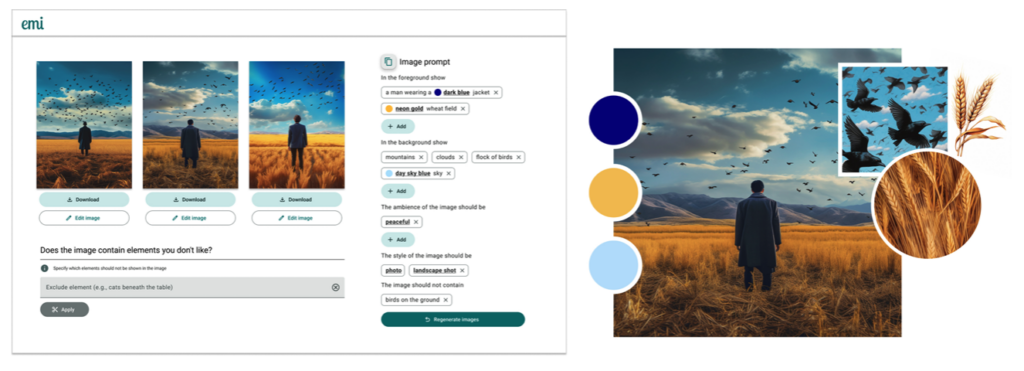
Emi: User Interface Components for Generating Emotional Images for Mood Boards
This project delves into improving text-to-image generators for conveying emotions effectively. Through a co-design workshop, essential user interface components were identified and incorporated into a clickable prototype named Emi. Evaluation results indicate Emi’s UI components are highly useful in creating emotional images, offering a user-friendly experience that balances functionality and aesthetics.
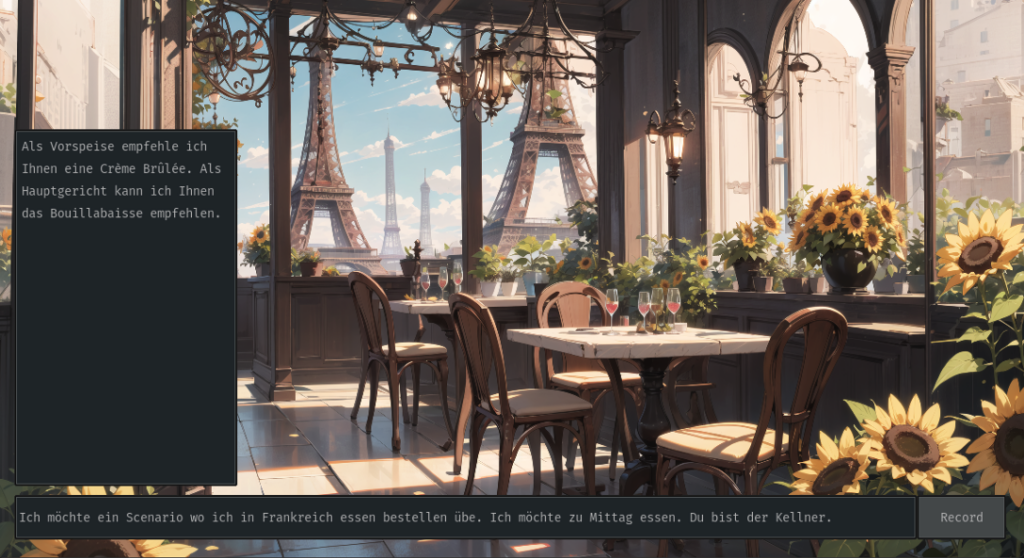
Bridging the Gap: Utilising Generative AI for Scenario-Based Second Language Acquisition
This project explores how AI can enhance language learning through personalized environments. By using generative AI, it aims to improve existing methods and create tailored learning experiences. Through collaboration with language learners, the project refines prototypes and develops design guidelines to address challenges in Second Language Acquisition. Its goal is to establish a foundation for effective AI-based language learning tools.
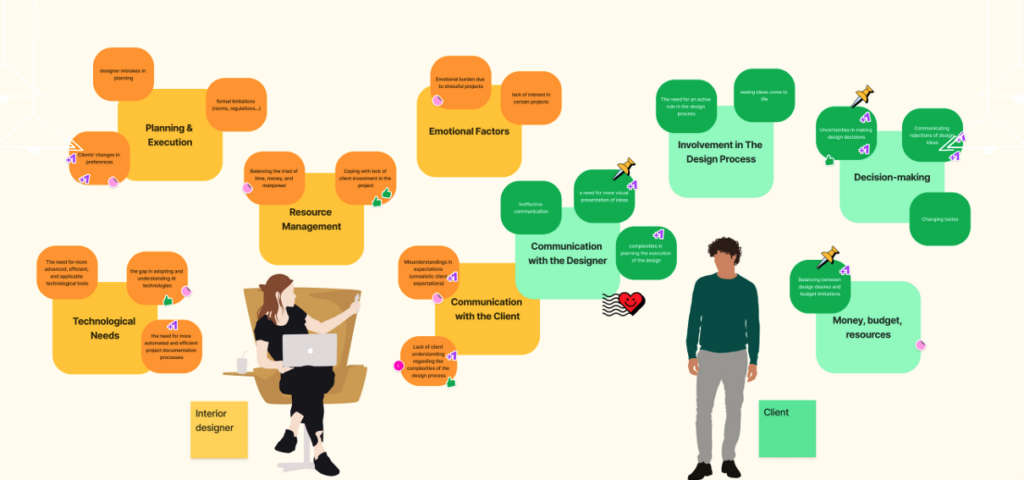
Are We On The Same Page? AI in Interior Design for Enhanced Communication and Creativity
This project investigates how AI can enhance collaboration between interior designers and clients during the briefing stage of projects. Through qualitative research methods, including interviews and workshops, key challenges and potential solutions were identified. The findings suggest AI-assisted tools could facilitate creative collaboration, though concerns and limitations were also addressed. This paper sheds light on the potential of AI in interior design, paving the way for future exploration in the field.
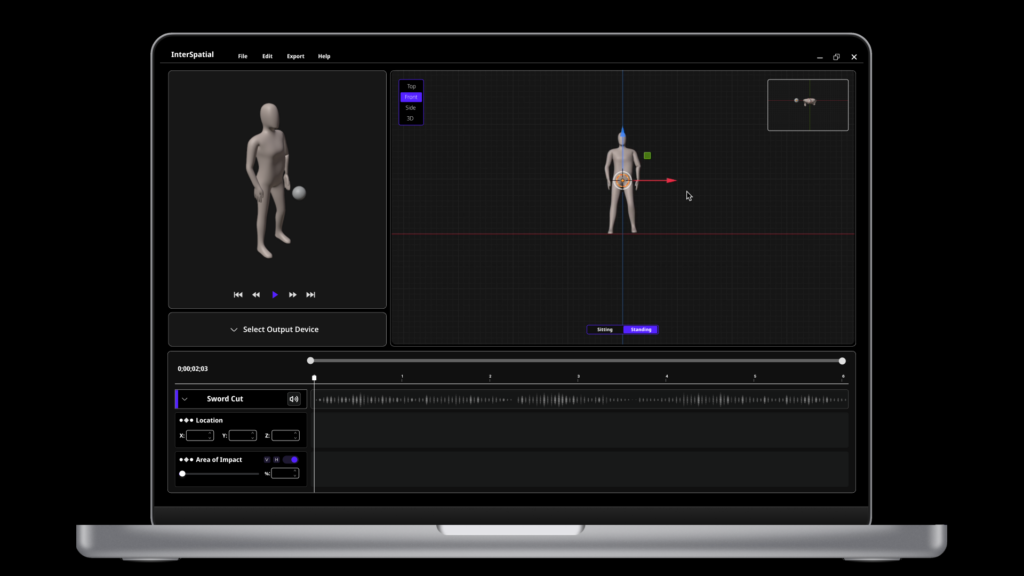
InterSensa: Multidirectional Haptics Design Tool
This project tackles the challenge of providing multidirectional haptic feedback to enhance immersive experiences. A cutting-edge prototype software tool has been developed to integrate seamlessly with Interhaptics Haptic Composer. Designed for intuitive creation and management of haptic feedback, it ensures ease of use and device-agnostic compatibility. This tool aims to fill the gap in the market for comprehensive haptic solutions, promising enhanced realism and depth in audio technology experiences.

Salzburger Freilichtmuseum: A User-Centered Project
For our industry project in Human-Computer Interaction (HCI), we partnered with the “Salzburger Freilichtmuseum”, an expansive outdoor museum in Großgmain near Salzburg. While the museum excels in sustainability, it faces challenges in accessibility due to its natural terrain and traditional building displays. Particularly, individuals with mobility impairments find it difficult to access exhibitions typically housed on the first floor. To address this, our initial task was to create a digital museum guide. However, as research progressed, we iterated on the brief, exploring alternative solutions beyond a digital app.
Industry Projects
In the third semester the focus is on the industry project, where students have the opportunity to tackle a real-world problem from an HCI point of view. Students learn how to use principles in organisation, methods, technology, and design to work on a problem of a partner company. They start from a complex HCI problem and end with a practical solution. Students are able to document and present their work in a professional manner.
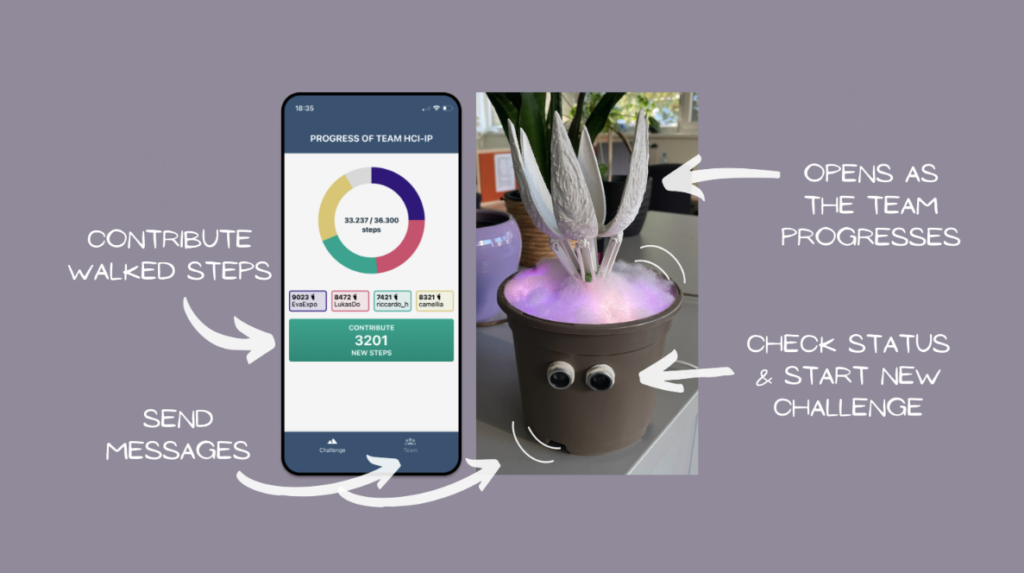
Motivating Physical Activity with Shared Achievements
This project was undertaken with the Ludwig Boltzmann Institute for Digital Health and Prevention (LBI DHP), which investigates the use of technology to sustain a lifelong healthy lifestyle.
For more projects visit the FH Portfolio website
Student achievements
Conference Paper
Jose Maria Santiago
Students will be able to apply theoretical knowledge, as well as technological and methodological skills to master a complex research problem. They will be able to formulate well-defined research questions and conceptualize an appropriate study. They will be able to select and apply a methodological approach, perform appropriate (user-)studies, analyse their data appropriately and interpret their findings. They will be able to write a scientific research paper and submit it to a scientific HCI conference.
Conference Paper
Jose Maria Santiago
Students will be able to apply theoretical knowledge, as well as technological and methodological skills to master a complex research problem. They will be able to formulate well-defined research questions and conceptualize an appropriate study. They will be able to select and apply a methodological approach, perform appropriate (user-)studies, analyse their data appropriately and interpret their findings. They will be able to write a scientific research paper and submit it to a scientific HCI conference.
Conference Paper
Jose Maria Santiago
Students will be able to apply theoretical knowledge, as well as technological and methodological skills to master a complex research problem. They will be able to formulate well-defined research questions and conceptualize an appropriate study. They will be able to select and apply a methodological approach, perform appropriate (user-)studies, analyse their data appropriately and interpret their findings. They will be able to write a scientific research paper and submit it to a scientific HCI conference.
Conference Paper
Jose Maria Santiago
Students will be able to apply theoretical knowledge, as well as technological and methodological skills to master a complex research problem. They will be able to formulate well-defined research questions and conceptualize an appropriate study. They will be able to select and apply a methodological approach, perform appropriate (user-)studies, analyse their data appropriately and interpret their findings. They will be able to write a scientific research paper and submit it to a scientific HCI conference.
Alumni
Camellia Redko
1st year HCI student
Class of 2025
Riccardo Longo
1st year HCI student
Class of 2025
Moritz Sendner
1st year HCI student
Class of 2025
Moritz Sendner
1st year HCI student
Class of 2025
Moritz Sendner
1st year HCI student
Class of 2025
Camellia Redko
1st year HCI student
Class of 2025
Riccardo Longo
1st year HCI student
Class of 2025
Moritz Sendner
1st year HCI student
Class of 2025
Moritz Sendner
1st year HCI student
Class of 2025
Moritz Sendner
1st year HCI student
Class of 2025
Camellia Redko
1st year HCI student
Class of 2025
Riccardo Longo
1st year HCI student
Class of 2025
Moritz Sendner
1st year HCI student
Class of 2025
Moritz Sendner
1st year HCI student
Class of 2025
Moritz Sendner
1st year HCI student
Class of 2025